
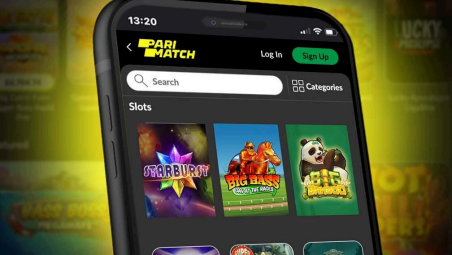
There was a time when digital entertainment asked for patience. Sit down, log in, learn the rules, commit half an hour or more, maybe longer. That model still exists, obviously, and it still works for a lot of people. But it’s not the only one anymore. The bigger story now is speed. Quick entry, short rounds, immediate feedback, low friction. People don’t always want a full session. Sometimes they want three minutes of action and then they’re gone.
That’s exactly where formats like parimatch instant games make sense in the wider market. Not because they reinvent entertainment from scratch, but because they fit modern behavior almost too well. Open app, tap once or twice, understand what’s happening straight away, get a result,
move on or keep going. No buildup. No waiting around. In a mobile-first world, that kind of structure is hard to ignore.
Fast entertainment isn’t a niche trend anymore. It’s becoming one of the default ways people consume digital products, especially on phones. And instant games are part of that shift.
What “fast format” entertainment actually means
The phrase sounds a bit broad, but the idea is simple. Fast entertainment formats are built around short attention windows. They don’t require long instructions, deep setup, or major emotional investment before the payoff begins.
That can include a lot of things:
– short-form video
– mini-games
– live prediction mechanics
– instant-win game loops
– one-tap social content
– ultra-quick betting or arcade formats
What links them isn’t genre. It’s rhythm.
Fast formats are designed to start quickly, reward quickly, and reset quickly. That’s the pattern. They remove the dead space that used to sit between interest and action.
Why short-form digital experiences work so well now
This isn’t hard to explain if anyone’s honest about how phones changed behavior.
Most people no longer use their devices in one long block of focused leisure time. They use them in fragments. While waiting. While commuting. Between tasks. During ad breaks. Late at night when attention is thin and patience is thinner. Entertainment has adapted to that reality.
A fast format works because it respects interruption. It doesn’t punish the user for showing up with limited time. In fact, it’s built for exactly that kind of visit.
That’s one reason instant games spread so easily across mobile platforms. They don’t ask users to commit much upfront. The learning curve is short. The interface is usually obvious. The result comes fast. For plenty of users, that’s not a compromise. That’s the appeal.
Instant games and the psychology of pace
There’s a reason these formats feel sticky. Speed changes the emotional texture of a product.
Longer entertainment formats build anticipation slowly. Fast ones create a tighter loop of curiosity, action, and result. That loop can be satisfying because it removes downtime. It can also become repetitive in a way users barely notice. Round after round, tap after tap, the tempo does a lot of the work.
That doesn’t make fast formats inherently bad. It just means they’re effective by design. A short entertainment cycle usually includes:
1. immediate access
2. minimal explanation
3. quick reward or loss
4. near-instant replay option
That’s a powerful structure. It works in games, in social apps, in shopping, in content platforms. Instant entertainment didn’t emerge in isolation. It grew from a broader digital habit where people are trained to expect response right away.
Why mobile made this format stronger
Could instant games exist without mobile? Sure. Would they matter as much? Probably not.
Mobile devices changed the rules because they brought entertainment into tiny unused slices of the day. That matters more than people admit. A product that takes fifteen minutes to become interesting is at a disadvantage when the user is standing in a queue or checking a phone between meetings.
Fast entertainment thrives on accessibility. Mobile gives it:
Constant availability
The device is already in hand. No extra setup. No platform switch. No wait.
Touch-based simplicity
Tap, swipe, confirm. Fast formats work better when the interface doesn’t get in the way.
Notification-driven return
Users can be pulled back in with prompts, reminders, bonuses, or time-sensitive triggers. That keeps short sessions coming back throughout the day.
Low tolerance for friction
Mobile users abandon products quickly if loading, navigation, or onboarding feels clumsy. Instant game formats are built with that in mind.
This is why sleek design alone is not enough. Speed has to be built into the product logic itself.
Not all fast entertainment is shallow
There’s a lazy argument that anything quick must be low quality. That’s not really true.
Short formats are different from deep formats, not necessarily worse. A good instant game can be sharp, visually clean, mechanically satisfying, and perfectly tuned to the amount of time a user actually has. It doesn’t need a huge storyline or twenty layered features to do its job well.
In fact, one of the biggest mistakes in digital product design is overbuilding. Too many menus, too much explanation, too many steps before the user reaches the point. Fast entertainment succeeds because it edits aggressively. It knows what to leave out.
That takes discipline.
What users seem to like about instant formats
The popularity of quick-play products isn’t driven by one thing. It’s a combination of practical and emotional factors.
They’re easy to understand
Nobody wants to study a manual on a phone screen. Fast formats usually explain themselves in seconds.
They fit real schedules
A user doesn’t need to clear half an hour to engage. That makes the experience feel lighter, even when it’s repeated often.
They deliver immediate feedback
People like knowing what happened without waiting. Win, lose, continue, done.
They feel less demanding
There’s less pressure to “perform” in a long session. That lowers the barrier to entry.
They suit casual behavior
Not every digital interaction needs to be immersive. Sometimes casual is exactly the point.
This is where product teams got smart. They stopped designing only for idealized leisure time and started designing for reality, which is fragmented, distracted, and mobile.
The business side of fast entertainment
Of course, there’s also a commercial reason these formats are everywhere. Short cycles tend to increase frequency. If the product is smooth, users can complete more interactions in less time. That creates more engagement opportunities, more retention points, and more chances to monetize.
That’s true across industries, not just gaming.
Fast entertainment works well because it is:
– cheaper to sample
– easier to repeat
– more compatible with mobile habits
– highly shareable or promotable
– easier to test and optimize through user behavior
For operators and developers, this is attractive. For users, it means the market will keep producing more of these experiences, not fewer.
The downside nobody should ignore
There’s an obvious catch. Speed can blur awareness.
When entertainment formats become extremely short, users may stop noticing how much time or money they’re spending inside them. The friction that once gave people a moment to think gets reduced or removed. In some products that’s a convenience feature. In others it becomes a problem.
That’s why fast entertainment needs better guardrails than many platforms currently provide. Especially in products tied to real money or repeated micro-decisions.
A few things matter here:
– visible session tracking
– optional limits or reminders
– clear cost display
– no misleading “almost won” manipulations
– simple pause tools
Without that, fast formats can slide from convenient to compulsive without much warning in between.
Why this trend is not going away
Some digital trends burn bright and then disappear. Fast entertainment isn’t one of them. It’s too closely aligned with how people now use technology.
Users have been trained by social media, short-form video, mobile commerce, and instant messaging to expect responsiveness. They don’t want every experience to unfold slowly. In many cases, they actively avoid products that take too long to become rewarding.
That doesn’t mean long-form entertainment is dead. It means the market has split. There’s still room for deep, immersive experiences. But there’s also huge demand for formats that deliver a burst of entertainment without asking the user to reorganize the day around it.
That’s not a fad. That’s a behavioral shift.
What makes a good fast entertainment product
Plenty of products are quick. Fewer are actually good.
A solid fast-format experience usually gets the balance right between simplicity and control. It starts instantly, makes the outcome easy to understand, looks clean on mobile, and avoids clutter. Just as important, it doesn’t mistake speed for chaos.
The best ones usually have a few traits in common:
– quick loading and simple navigation
– obvious mechanics
– readable design on smaller screens
– short sessions without unnecessary interruption
– transparent outcomes
– enough variety to avoid feeling mechanical too soon
That last point matters. Fast doesn’t mean mindless. Users still notice when a product becomes stale.
Final thoughts
Fast entertainment formats are not replacing everything else, but they are reshaping expectations. People have become used to digital experiences that start immediately, make sense without effort, and deliver a result while there’s still time left in the moment. That’s a very modern kind of demand, and instant games fit it almost perfectly.
The appeal is easy to see. They’re accessible, mobile-friendly, low-friction, and built for the way attention actually works now, not the way product teams once imagined it should work. That’s why they’ve moved from side category to serious market force.
For users, the main value is convenience. For platforms, it’s engagement. For the wider industry, it’s a reminder that speed has become more than a feature. In a lot of digital spaces, it’s the format itself.
And like most formats that spread this quickly, it tells a bigger story about people than about technology. Not that attention is gone, but that time feels tighter, habits are faster, and entertainment that understands that tends to win.